

Meet Meg:
Claircartographer:
noun | kler-kär-ˈtä-grə-fər
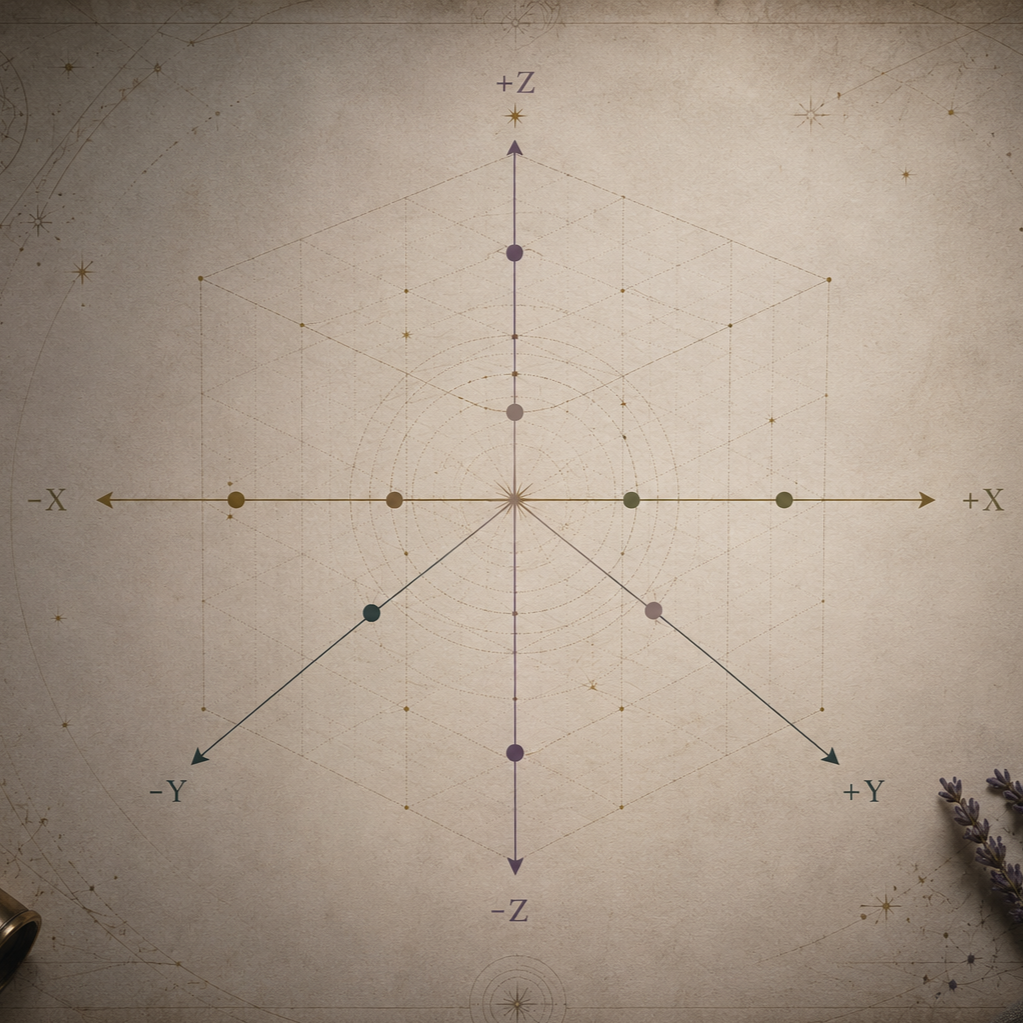
A Claircartographer is a clear-mapper: someone who maps signals from the self, the relational field and the collective. It may sound mystical, and sometimes the work does move through symbolic or intuitive channels, but it is not about abandoning discernment or floating away from reality. It is a way of checking intuited pattern recognition against three foundational axes of meaning: what is absent or present, who is authoring the meaning, and whether the signal is still in possibility or has collapsed into certainty.
I help people and teams locate the meaning beneath the message. My work lives at the intersection of strategic communications, symbolic inquiry, pattern recognition and meaning-making. I build communications that can stretch, flex, and still hold up—creating structure and story, clarity and resonance, meaning and momentum.
I’m a corporate communications consultant and a neurodivergent systems thinker with a mother’s intuition.
I’m the author of the Meaning Matrix and founder of Plot.
I help people and teams locate the meaning beneath the message, the pattern beneath the problem, and the point of view shaping what comes next.
Before developing the Meaning Matrix and the practice of Claircartography, I built my career in communications: leading internal comms for major brands, training content teams, developing editorial systems, translating complex ideas into usable frameworks and helping big ideas become clear enough to move through the world.
I have always been a pattern listener. As a neurodivergent systems thinker, I don’t just notice patterns. I feel for the structure underneath them. I listen for what is missing, what is repeated, what is overexplained, what is avoided, what is asking to be named, and what kind of meaning a person or collective is already trying to make.
That is what led me to create the Meaning Matrix: a three-dimensional framework for locating points of view in meaning space. Claircartography is the practice that grew from that framework. In other words, I don’t treat intuition as the final answer. I treat it as a signal to locate.
The map helps us test the signal for alignment. Is this mine, yours, ours, or inherited? Is it missing, hidden, alive, distorted, projected, embodied or ready to move? Is the meaning still unfolding, or has it already landed as a belief, behavior, message, identity, strategy or impact?
That process can be personal, relational, creative, or strategic.